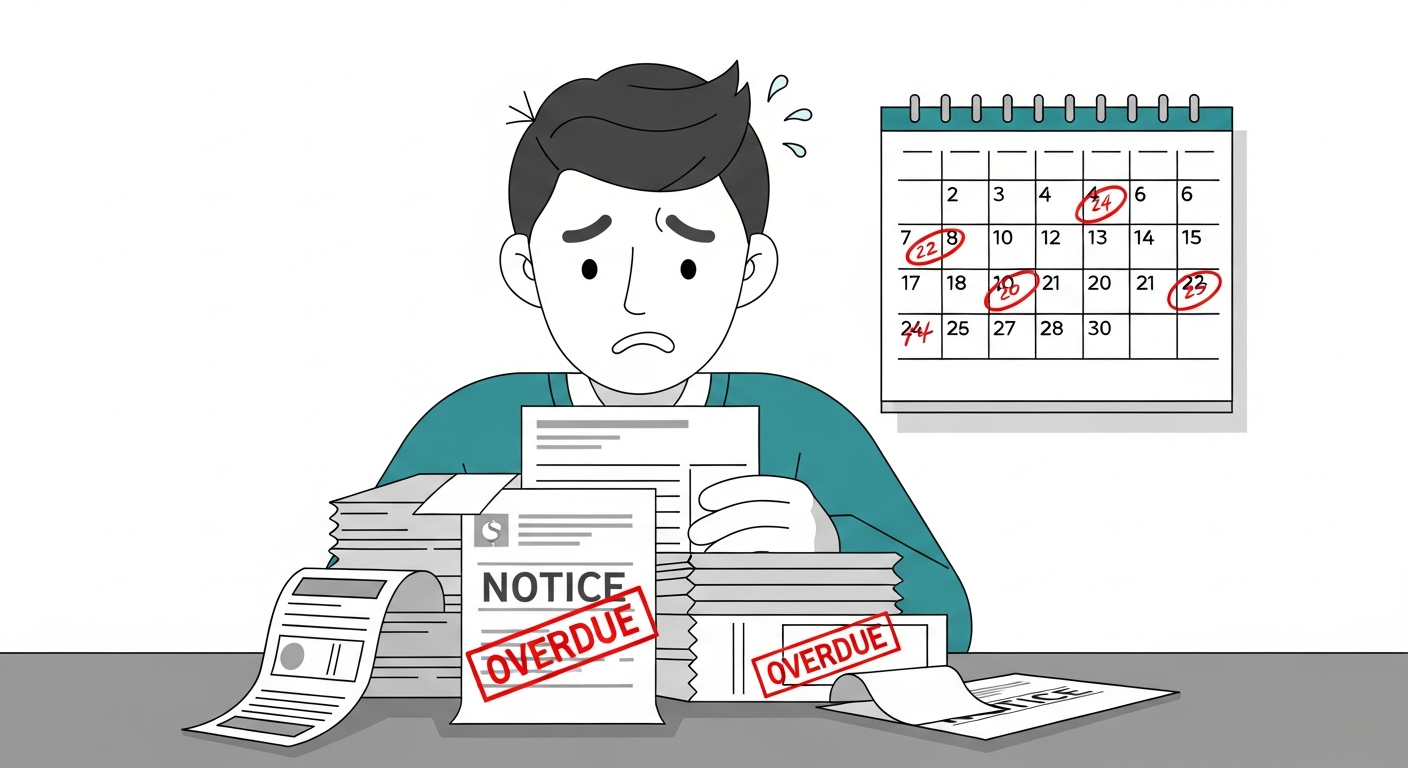
What Happens If You Don't Pay a Payday Loan?
Defaulting on a payday loan triggers a specific sequence of consequences. Understanding what happens at each stage helps you respond strategically and protect your finances, credit, and peace of mind. The exact timeline and severity depend on your state laws, the lender's policies, and whether you communicate with the lender or avoid them.
Day 1–14: Missed Payment and Late Fees
When you miss your payday loan due date, the lender typically charges a late fee or NSF (non-sufficient funds) fee. These fees vary by state and lender but commonly range from $15 to $30 per missed payment. Some lenders attempt to debit your bank account automatically on the due date. If the debit fails, you may also owe your bank an overdraft fee ($25–$35).
During this window, the lender may contact you via phone, text, or email to collect payment. If you communicate proactively, many lenders offer a grace period or one-time fee waiver. Ignoring the lender accelerates the process to the next stage.
Day 15–30: Collections and Escalating Fees
After two weeks of non-payment, the lender typically transfers the account to their internal collections department or sells the debt to a third-party debt collector. At this point, you may face:
- Additional fees: Daily or weekly interest may continue to accrue in states without rate caps. Some lenders add "collection fees" of 10–20% of the balance.
- Increased contact: Collectors may call multiple times per day, send letters, and contact references you listed on the application.
- Credit reporting: If the lender or collector reports to credit bureaus, the account will appear as a delinquency or collection account. This can drop your credit score by 50–100 points and remain on your report for 7 years.
Important: Not all payday lenders report to credit bureaus. Many do not report on-time payments but do report defaults. Check your credit report at AnnualCreditReport.com to see if the lender has reported the debt.
Day 30–90: Lawsuit Threats and Legal Action
After 30–60 days of non-payment, some lenders or collectors threaten legal action. In practice, small-dollar payday lenders rarely sue for amounts under $500 due to court costs. However, for larger balances ($1,000+), lawsuits are more common. If you are sued and do not respond, the lender may win a default judgment, which allows them to:
- Garnish your wages (in most states, up to 25% of disposable income)
- Freeze your bank account and seize funds
- Place a lien on your property
Do not ignore a court summons. Even if you cannot pay, appearing in court gives you the opportunity to dispute the debt, negotiate a payment plan, or prove the loan violates state usury laws. A default judgment is far worse than negotiating.
Can You Go to Jail for Not Paying a Payday Loan?
No. You cannot be arrested for failing to repay a payday loan in the United States. Debtor's prison was abolished federally in 1833. However, some lenders use a deceptive tactic: they file a criminal complaint for "check fraud" or "theft by check" if you wrote a post-dated check or authorized an ACH debit that bounced.
This is illegal in most states. If a lender threatens jail, report them to your state attorney general and the Consumer Financial Protection Bureau (CFPB). If you receive a court summons, it is a civil matter — not criminal. Respond to the summons and seek legal aid if needed.
State Protections That Limit Consequences
Some states have laws that protect borrowers from the worst consequences of default:
- California: Lenders must offer a no-cost repayment plan before sending debt to collections. Wage garnishment requires a court order.
- Florida: Mandatory credit counseling and restrictions on collection fees. No garnishment of wages below a minimum threshold.
- Texas: Limits on wage garnishment (only for child support, taxes, and federal student loans — not payday loans). Strong homestead exemptions protect your home.
- Illinois: Extended Payment Plan (EPP) allows you to repay in 4 installments without additional fees. Lenders must offer this before collections.
- Colorado: APR capped at 36% and 6-month minimum loan term. No balloon payments allowed.
If your state has a usury cap and the lender charged more, the debt may be legally unenforceable. Contact your state attorney general's consumer protection office for guidance.
What to Do If You Cannot Pay
If you know you cannot repay your payday loan, take these steps to minimize damage:
- Contact the lender immediately: Ask for a payment plan, extension, or settlement. Lenders prefer to get some money over nothing. Be honest about your situation.
- Request an Extended Payment Plan (EPP): If you are in an eligible state, the lender must offer an EPP. This splits the debt into 4 equal payments over your next 4 paydays with no additional fees.
- Close your bank account (last resort): If the lender is repeatedly attempting unauthorized debits and causing overdraft fees, you may close the account. This is a last resort — it does not eliminate the debt, but it stops the fees. The lender may still sue.
- Consult a nonprofit credit counselor: Agencies like NFCC-certified agencies can negotiate with lenders on your behalf and help you create a budget.
- Know your rights under the FDCPA: Debt collectors cannot call before 8 AM or after 9 PM, cannot harass you, cannot threaten jail, and must validate the debt within 5 days of first contact. Report violations to the CFPB.
How to Avoid Defaulting in the First Place
Prevention is always better than damage control. Before taking a payday loan:
- Borrow only what you can repay with your next paycheck
- Have a clear repayment plan before signing
- Explore alternatives: cash advance apps, credit union PALs, employer paycheck advances
- Read the loan agreement for hidden fees, rollover terms, and collection policies
- Build a small emergency fund ($200–$500) to avoid needing payday loans
Bottom Line
Not paying a payday loan is serious but not unmanageable. Late fees, collections, and potential lawsuits are real risks, but you have legal protections and options. The worst thing you can do is ignore the situation. Contact the lender, know your state laws, and consider credit counseling. The sooner you act, the more options you have.
Disclosure: CashAdvanceFinder.com is not a financial advisor. This content is for educational purposes only and does not constitute legal or professional advice. If you are facing legal action, consult a licensed attorney or legal aid organization in your state.