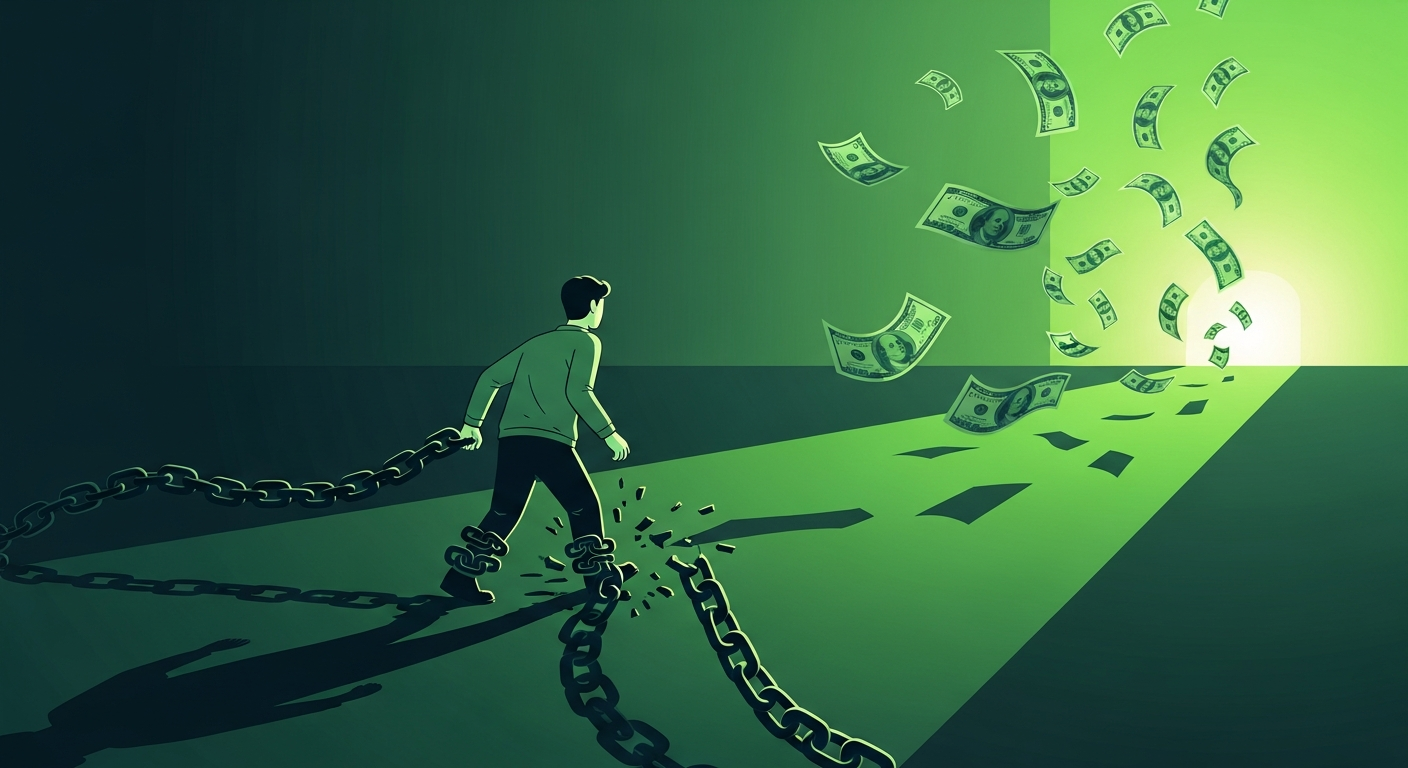
Every year, millions of Americans take out payday loans intending to repay them within two weeks — and end up trapped in a cycle of debt that can last months. The Consumer Financial Protection Bureau (CFPB) found that more than 80% of payday loans are rolled over or followed by another loan within 14 days. Understanding how the debt trap works — and how to avoid it — can save you thousands of dollars and significant financial stress.
How the Payday Loan Debt Trap Works
The mechanics are simple. You borrow $300 with a $45 fee, due in two weeks. On payday, you repay $345 — but that wipes out a large portion of your paycheck, leaving you short again. So you take out another $300 loan. Within a few months, you may have paid $180–$270 in fees on an original $300 loan that you never actually resolved. This is the debt trap: a cycle where you pay fees repeatedly without making progress on the principal.
Some states cap the number of consecutive loans you can take or require lenders to offer extended repayment plans. But many states have weak regulations, and online lenders often operate in less-regulated environments.
Warning Signs of Predatory Payday Lenders
Not all short-term lenders are predatory, but here are red flags to watch for:
- No APR disclosure: Legitimate lenders must disclose the Annual Percentage Rate under the Truth in Lending Act (TILA). If a lender only quotes you the fee (e.g., "$15 per $100") without expressing it as an APR, be cautious.
- Automatic rollover by default: Some lenders automatically roll your loan over unless you opt out. Read the repayment terms carefully.
- Pressure to borrow more: "You qualify for $600 — why not take the full amount?" More debt means more fees. Only borrow what you actually need.
- No physical address or unclear licensing: All payday lenders must be licensed in the states where they operate. Verify the lender's license through your state's banking regulator website.
- Upfront fee requirements: Legitimate lenders deduct fees from your loan amount or collect them at repayment. Any lender asking for upfront fees before releasing funds is likely a scam.
Before You Borrow: Questions to Ask Yourself
Take two minutes to answer these questions before accepting any short-term loan:
- Can I repay the full amount (principal + fee) on my next payday without leaving myself short for essential expenses?
- Is this a true emergency, or can it wait a week until my next paycheck?
- Have I explored all other options (cash advance app, employer advance, family loan, credit union)?
- Do I know the exact APR and total repayment amount?
If you cannot answer "yes" to question 1, do not take the loan. A loan you cannot repay on time is a loan that will cost you far more than you expected.
Smarter Alternatives to Payday Loans
Cash Advance Apps
Apps like Earnin, Dave, and Brigit offer advances of $50–$750 with no interest and low or optional fees. They work for most W-2 employees with direct deposit. See our comparison of top cash advance apps for details.
Credit Union Payday Alternative Loans (PALs)
If you belong to a federal credit union, you may qualify for a Payday Alternative Loan (PAL) — a small loan ($200–$2,000) with an APR capped at 28% and terms of 1–12 months. That is roughly 10x cheaper than a typical payday loan.
Employer Paycheck Advance
Many employers, especially larger companies, will advance you a portion of your next paycheck at no cost. This is the cheapest possible option. Ask your HR or payroll department — the worst they can say is no.
Negotiate a Payment Plan with Creditors
If you need cash to pay a bill, call the creditor directly and ask for an extension or hardship plan. Utility companies, medical providers, and landlords often have programs that can delay due dates by 2–4 weeks with no fees.
Local Community Assistance
Nonprofits, churches, and community action agencies often provide emergency grants or interest-free micro-loans. Call 211 (United Way) to find programs in your area.
If You Are Already in the Debt Cycle
If you are rolling over loans and cannot get out, these steps can help:
- Stop rolling over immediately. Contact your lender and request an extended repayment plan (EPP). In many states, lenders are legally required to offer one.
- Prioritize the loan above other non-essential expenses. Temporarily cut subscriptions, dining out, or other discretionary spending to free up cash for repayment.
- Seek credit counseling. Nonprofit credit counseling agencies (find one at NFCC.org) can help negotiate with lenders and create a debt management plan at little to no cost.
- Contact your state attorney general. If you believe a lender violated the law — by charging illegal fees, failing to disclose the APR, or harassing you — file a complaint with your state's attorney general and the CFPB at consumerfinance.gov.
Build Your $500 Emergency Fund
The single best defense against payday loan debt is an emergency fund. You don't need $10,000. Research consistently shows that having even $400–$500 in accessible savings prevents most people from needing a payday loan at all.
Start small: set up an automatic transfer of $20–$25 per paycheck to a separate savings account. After 10 paychecks, you have a $200–$250 buffer. After 20, you have $400–$500. Keep that money separate from your everyday checking account so it's not tempting to spend.
Bottom Line
Payday loans can serve a legitimate purpose in a genuine emergency — but only when used once, with a clear repayment plan, from a licensed lender with full fee disclosure. Treat them as a last resort, not a monthly cash management tool. Building even a small emergency fund and knowing your alternatives can make the difference between a one-time expense and months of debt.