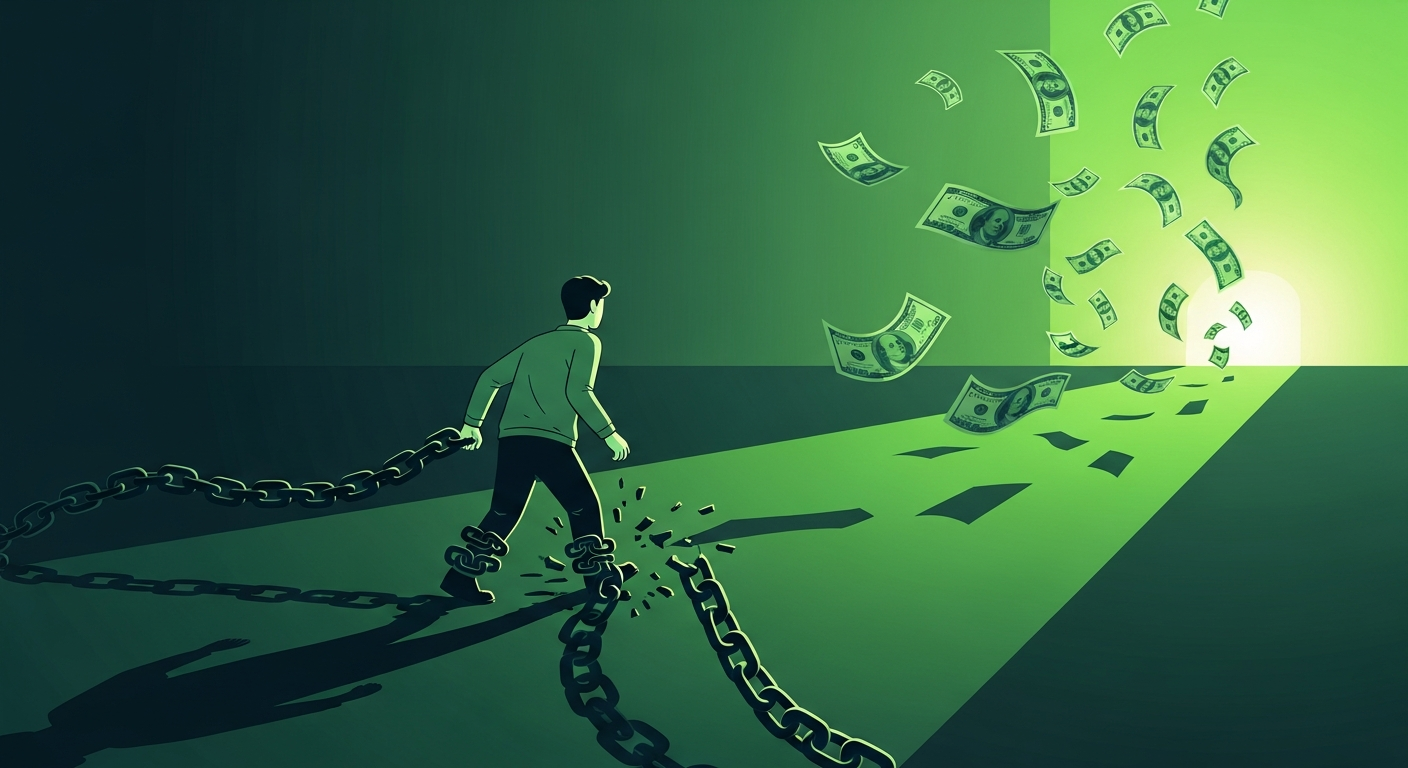
Why Payday Loan Debt Is Hard to Escape
Payday loans are designed to be repaid in a single lump sum on your next payday — typically 2–4 weeks. The problem is that borrowers often cannot afford the full repayment plus fees, so they renew or roll over the loan. This creates a cycle where fees compound faster than principal is paid down. A $300 loan can become a $1,000+ debt in just a few months.
If you are trapped in payday loan debt, there are proven ways to escape. The strategy depends on how many loans you have, your state laws, and your income. This guide covers every viable path out.
Step 1: Stop Borrowing More
The first and most important step is to stop the cycle. Do not take out another payday loan to pay off an existing one. This is the trap that makes debt spiral. If you have multiple loans, list them all:
- How much you owe each lender
- The APR or fee structure
- The due date
- Whether you have already rolled it over
This gives you a clear picture of what you are dealing with. Many borrowers underestimate their total debt because they focus on one loan at a time.
Step 2: Ask for an Extended Payment Plan (EPP)
Many payday lenders are legally required to offer an Extended Payment Plan if you request it. This converts your lump-sum repayment into a series of smaller payments over 4–6 weeks with no additional fees. Not all lenders advertise this, but they are often required by state law or industry association rules.
How to request it: Call the lender directly before the loan is due. State that you cannot repay the full amount and need an Extended Payment Plan. Ask for written confirmation. This single call can cut your monthly payment by 50–75% and stop new fees from accruing.
Important: Some lenders require you to request the EPP before the loan is due. If you miss the window, you lose the option.
Step 3: Negotiate a Settlement
Payday lenders buy debt for pennies on the dollar. If you are already behind on payments, you may be able to negotiate a lump-sum settlement for 40–60% of the balance. This is especially effective after the loan has been in default for 30+ days.
How to negotiate:
- Start with a low offer: 25–30% of the balance
- Get any settlement agreement in writing before paying
- Never give a lender direct access to your bank account after settlement
- Use a cashier's check or money order for the final payment
Be aware that settled debt may be reported to credit bureaus as "settled for less than full amount," which can affect your credit score. However, the impact is usually less severe than ongoing default.
Step 4: Use a Credit Counseling Agency
Nonprofit credit counseling agencies can negotiate with your lenders on your behalf. They enroll you in a Debt Management Plan (DMP) where you make a single monthly payment to the agency, and they distribute it to your lenders. DMPs typically:
- Reduce or eliminate interest and fees
- Consolidate multiple loans into one payment
- Lower your monthly payment by 30–50%
- Get you out of debt in 12–48 months
Look for an agency accredited by the National Foundation for Credit Counseling (NFCC) or the Financial Counseling Association of America (FCAA). Avoid for-profit "debt relief" companies that charge upfront fees — these are often scams.
Step 5: Consider a Personal Loan for Consolidation
If your credit score is above 580, you may qualify for a personal loan with a lower APR than payday loans. This is called debt consolidation. You use the personal loan to pay off all your payday loans, then repay the personal loan in fixed monthly installments over 1–3 years.
Where to find personal loans for consolidation:
- Credit unions: APRs as low as 8–18%, best rates for fair credit
- Online lenders (Upstart, Avant, OneMain): APRs 9–36%, more flexible
- Peer-to-peer lending (LendingClub, Prosper): APRs 8–35%
Even a 36% APR personal loan is dramatically cheaper than the 400%+ APR of a payday loan. The key is the longer term and fixed monthly payments, which makes the debt manageable.
Step 6: Know Your State Protections
Some states have strong consumer protections that can help you escape payday debt:
- Ohio: Capped APR at 28% — existing high-APR loans may be legally unenforceable
- Illinois: Limits to 6 loans per year and requires a 7-day cooling-off period
- California: $300 loan cap and mandatory 30-day repayment plan for borrowers in default
- Florida: 24-hour cooling-off period between loans and mandatory credit counseling
- Colorado: Capped APR at 36% and requires 6-month minimum loan term
If your state has a usury cap and your lender is charging more, you may be able to dispute the debt or sue the lender. Contact your state attorney general's consumer protection office for guidance.
Step 7: Use Cash Advance Apps to Bridge the Gap
While you are working your way out of debt, cash advance apps can help you avoid new payday loans. Apps like Dave ($1/month), Earnin (no fees), and Brigit ($9.99/month) offer small advances with zero interest. This is far cheaper than taking another payday loan to make a payment on an existing one.
However, do not use cash advances as a long-term solution. They are a temporary bridge while you implement the steps above.
Step 8: Build an Emergency Fund to Prevent Future Debt
Once you escape payday loan debt, the goal is to never return. Start building an emergency fund — even $500 is enough to cover most unexpected expenses. Strategies:
- Automate $20/week from checking to savings
- Sell unused items online for quick cash
- Pick up gig work for extra income
- Redirect payday loan payments into savings after debt is paid
According to the Consumer Financial Protection Bureau, borrowers with $400 in savings are 50% less likely to take out payday loans in the future.
Bottom Line: There Is a Way Out
Payday loan debt is overwhelming, but it is not permanent. Start by stopping the borrowing cycle, then work through Extended Payment Plans, settlement, credit counseling, or consolidation. The right path depends on your specific situation, but every path leads to the same destination: debt freedom.
If you need help immediately, contact the National Foundation for Credit Counseling at 1-800-388-2227 or visit nfcc.org. They offer free consultations and can connect you to a local nonprofit agency.
Disclosure: CashAdvanceFinder.com is not a financial advisor. This content is for educational purposes only and does not constitute professional advice. If you are in severe financial distress, contact a nonprofit credit counselor or your state financial protection office.