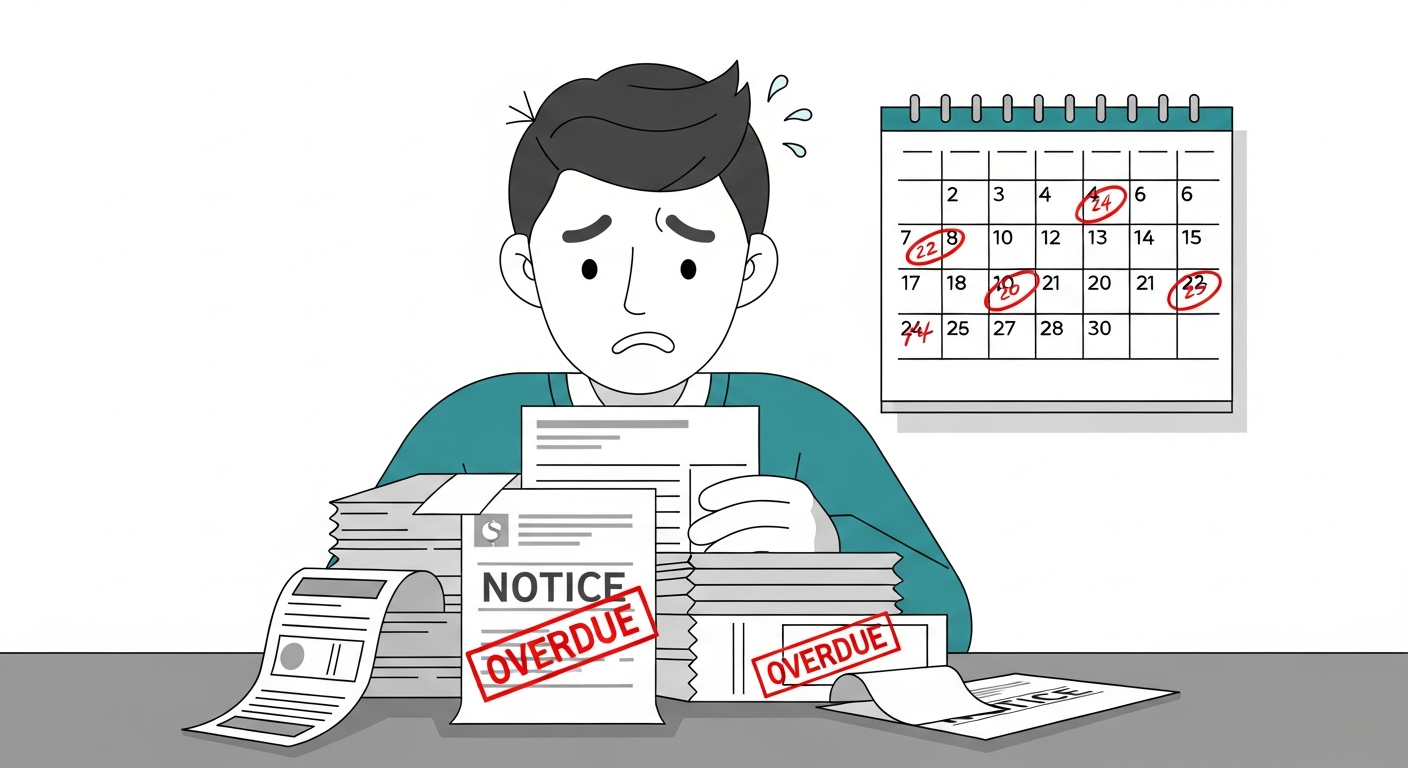
So you took out a payday loan. Now payday has arrived, and you don't have enough money to cover the full repayment plus the fee. This situation is more common than you think — the CFPB found that over 80% of payday loans are rolled over or followed by another loan within two weeks. If you are facing this reality, you need to know what happens next and how to minimize the damage.
Immediate Consequences: What Happens on the First Missed Payment
When you cannot repay a payday loan on the due date, the lender typically does one of the following:
- Auto-debit attempt: If you provided bank account access, the lender will attempt to withdraw the full repayment amount. If your account has insufficient funds, the bank may charge an overdraft fee (typically $25–$35) and return the transaction.
- Rollover offer: Many lenders will offer to "roll over" the loan — extending it for another two weeks by charging another fee. A $300 loan with a $45 fee becomes a $345 loan that costs $90 total if rolled over once. After two rollovers, you owe $180 in fees on the same $300 principal.
- ACH withdrawal attempts: Some lenders make multiple withdrawal attempts, triggering multiple bank fees on your account. The Electronic Fund Transfer Act limits unauthorized transactions, but state laws vary on how many attempts are permitted.
Your bank account may be drained. If the lender has continuous payment authority (ACH authorization), they can keep trying to withdraw until you explicitly revoke the authorization in writing — not just by closing your account or changing your debit card.
30–90 Days After Default: Collections and Fees
If the loan remains unpaid after 30 days, the lender will typically escalate to:
- Internal collections: The lender's own collections team will call, email, and text you. The frequency and intensity vary by lender and state law.
- Third-party collections agency: Many lenders sell defaulted loans to debt buyers at 3–10 cents on the dollar. Once sold, the debt buyer now owns your debt and will pursue collection aggressively. They may add additional collection fees, depending on state law.
- Credit reporting: Some payday lenders report to specialty credit bureaus (like Clarity Services, Teletrack, or MicroBilt). A default here does not affect your FICO score directly, but it can make future payday loans difficult or impossible to obtain. Some lenders also report to the major bureaus (Equifax, Experian, TransUnion), which will hurt your credit score.
- Bank account closure: If your account accumulates overdraft fees or negative balances, your bank may close it. This makes opening another checking account harder and can create long-term banking issues.
Legal Consequences: Can You Be Sued?
Yes — payday lenders can sue for the amount owed, plus court costs and interest in some states. However, the practical reality depends on the amount:
- Loans under $1,000 are rarely worth the legal costs for a lender to pursue. Most lenders rely on collections agencies and debt buyers instead.
- Some lenders use the threat of legal action as a pressure tactic. If you receive a lawsuit notice, do not ignore it. You have the right to respond and to demand proof that the debt is valid and that the lender is licensed in your state.
- Some states have strict anti-harassment laws. If a lender or collector threatens you with jail time (illegal), uses profane language, or calls your employer after you request they stop, report them to your state attorney general and the CFPB.
What You Should Do Right Now
If you can't pay your payday loan, take these steps immediately:
- Contact the lender and ask for an extended repayment plan (EPP). Many states require lenders to offer a no-fee EPP if you request it before the loan is due. This typically gives you an extra 60–90 days to repay the principal in installments without new fees.
- Revoke ACH authorization in writing. Send a letter to your bank and the lender explicitly revoking their right to withdraw funds from your account. This is your legal right under the Electronic Fund Transfer Act. Keep a copy.
- Negotiate a settlement. If you are already in default, offer to pay a lump sum lower than the total amount. Lenders and debt buyers often accept 50–75% of the balance if paid upfront. Get any settlement agreement in writing before paying.
- Seek nonprofit credit counseling. Agencies like NFCC-certified agencies can negotiate with your creditors and set up a debt management plan. Many offer free or low-cost consultations.
- Never ignore the problem. Silence leads to collections, lawsuits, and bank account closure. The earlier you act, the more options you have.
Preventing This Situation
The best way to handle a payday loan default is to avoid it entirely. Before taking any short-term loan, ask yourself: can I repay the full amount plus the fee on my next payday without falling short again? If the answer is no, you are already in a debt trap. Consider alternatives like cash advance apps, credit union PALs, or community assistance programs.
Disclosure: CashAdvanceFinder.com is not a lender and does not originate loans. This content is for informational purposes only and does not constitute legal or financial advice.